In October 1981, The Christian Science Monitor explored a heated controversy brewing over the skies above the White Mountains, where two Air National Guard units proposed a Military Operating Area (MOA) for high-speed, low-altitude training flights—a plan that struck deep into the region’s identity as a place of quiet recreation and scenic beauty. What thrilled pilots as valuable preparation for possible combat scenarios alarmed hikers, campers, and local residents, who argued that sudden, engine-throbbing fighter sorties—sometimes as low as 100 feet above ground—could disrupt the natural experience and even threaten wildlife habitats. With voices from community advocates and public officials opposing the proposal and urging the Air Force to consider alternatives, the story captures a moment when local quality of life, tourism, and environmental stewardship clashed with military training needs over one of New Hampshire’s most cherished landscapes.
January 23, 2026

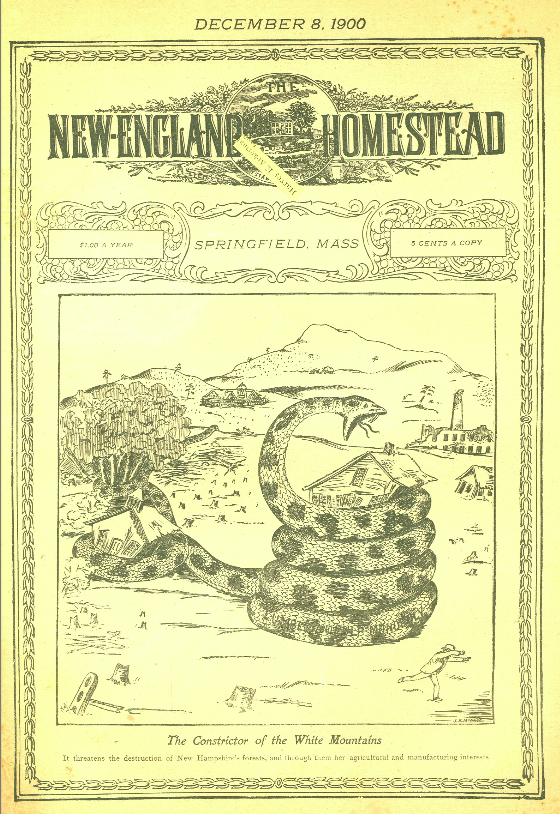
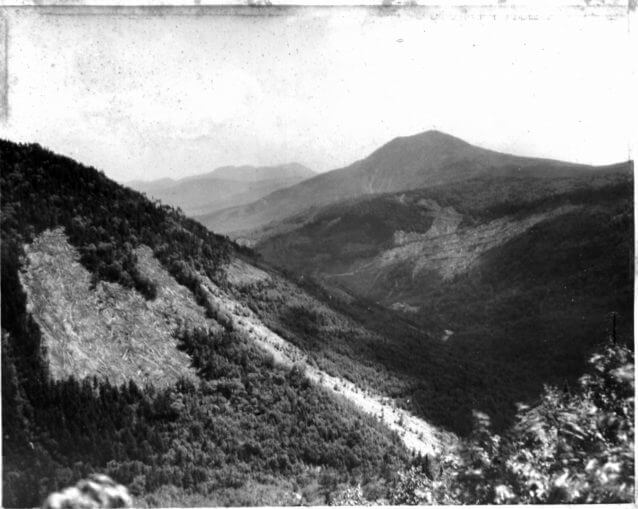
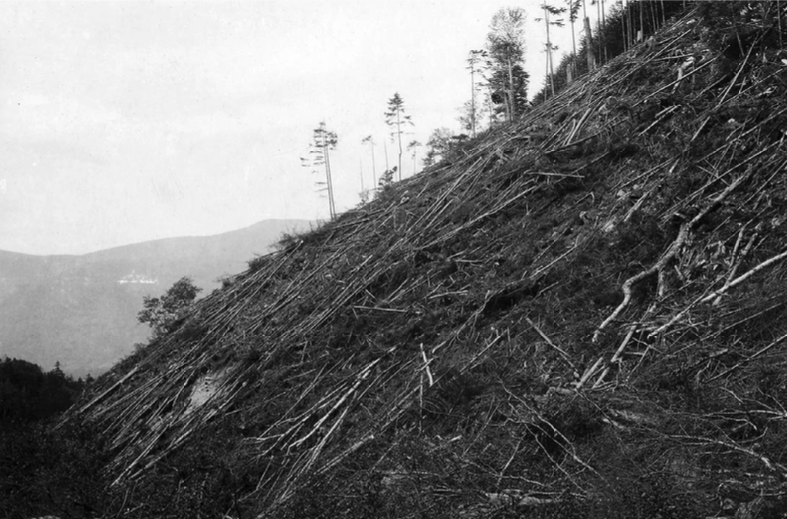
In 1900, Rev. John E. Johnson published “The Boa Constrictor of the White Mountains”—a fiery exposé warning that the New Hampshire Land Company posed an existential threat to the region’s forests, farms, and mills. Calling the corporation “a boa constrictor” determined “to depopulate and deforest” vast tracts of the White Mountains, Johnson argued that unchecked land speculation and aggressive timbering would destroy not only the natural landscape but also the agricultural and manufacturing backbone of New Hampshire. His impassioned writing, first delivered as a pamphlet in North Woodstock on July 4, 1900, helped fuel the growing public outcry that would ultimately lead to national forest protection in the Northeast—and, eventually, the passage of the Weeks Act.
December 7, 2025