BEARD OPERA HOUSE—1897
By Justus Conrad (North Woodstock, NH, Newspaper, May 29, 1897)
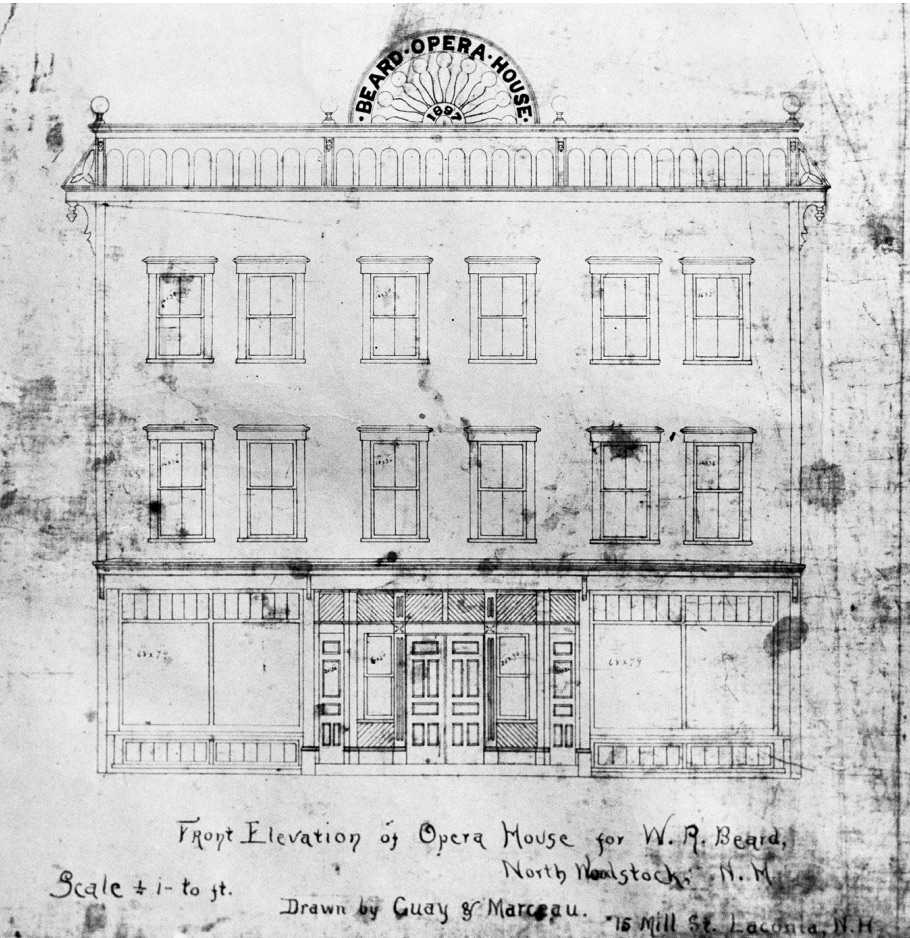
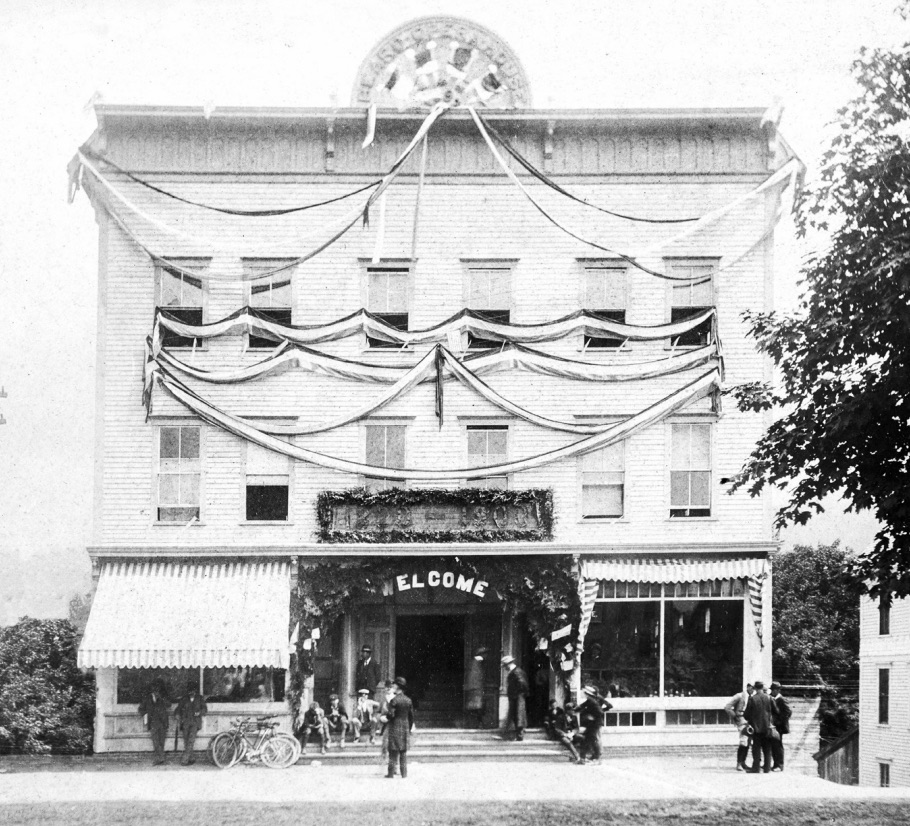
Left Image: Beard Opera House Blueprints, dated 1897. Right Image: Beard Opera House, Main Street, North Woodstock, NH, dated 1900.
The above name and date is one that greets the eyes of all that glance toward the east side of Main Street in North Woodstock village. Who would have thought five, or even one year ago, that we would have an Opera House in Woodstock? I say Woodstock, for I consider that, as citizens of this town, we should consider ourselves all one township family in common. Let not sectional feelings or imaginary lines separate us from the thought that an improvement at one end or one corner of the town is a benefit to the rest of the town in general. I am proud of my native town. I am proud of the town of Woodstock and its people. And in writing this article, let it be understood at the outset that I am not partial to any section of the town, and what bragging I do will be done for Woodstock and for those that have been instrumental in making the improvements which I may allude to.
Through the enterprise of William R. Beard, Woodstock has one of the best, if not the best, public halls that can be found in any country town of its size in the state. The word “Opera House” sounds big to us, but we can stand it all right. It is none too good for us. Although it is not public property, it is for the accommodation of the public, and it should be appreciated to a large degree. The building itself is 70 x 46 and four stories high on three sides. The street frontage is three stories. The hall is up one flight from the street front and, in design, is similar to the Moulton Opera House at Laconia. The stage is deep and roomy. On either side, there are two private boxes at the end of the balcony circle. Directly under the stage, there are dressing rooms galore that are reached by a winding stairway in the rear of the building. At the head of the main stairway on the left as one enters the hall is the ticket office, while at the right, there is a [suite] of offices. The balcony, which is directly over the offices, is reached by a stairway leading from the main hall floor.
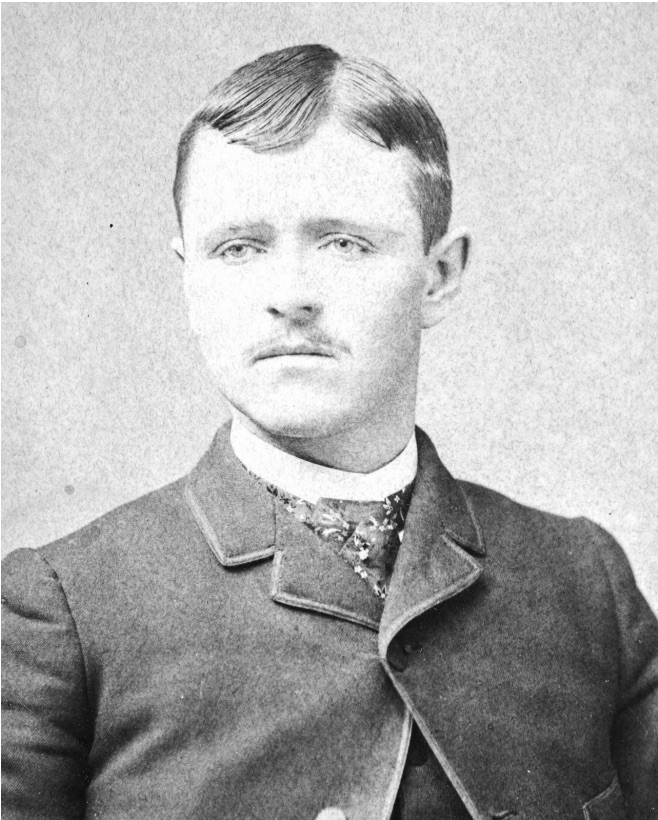
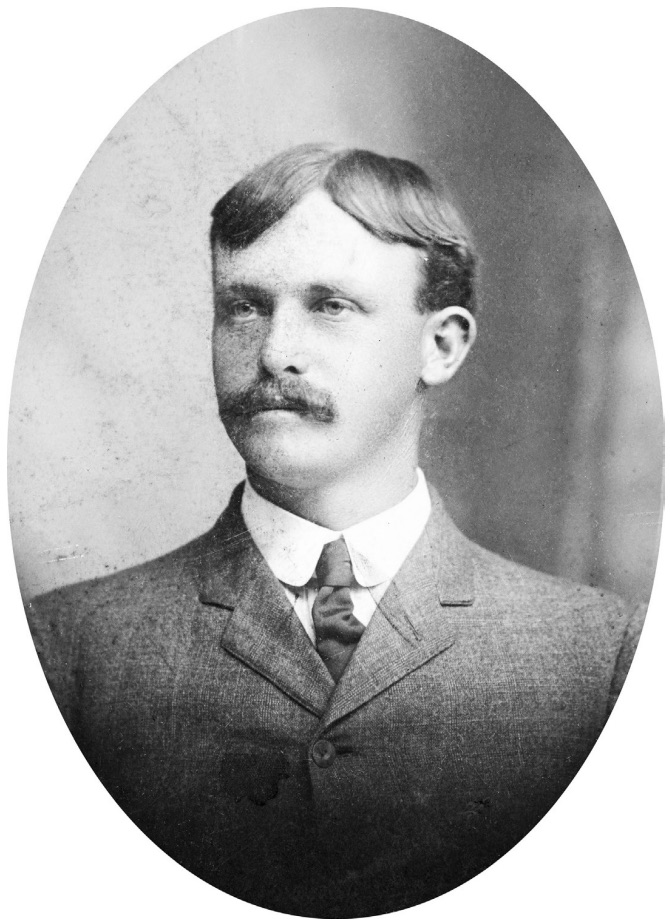
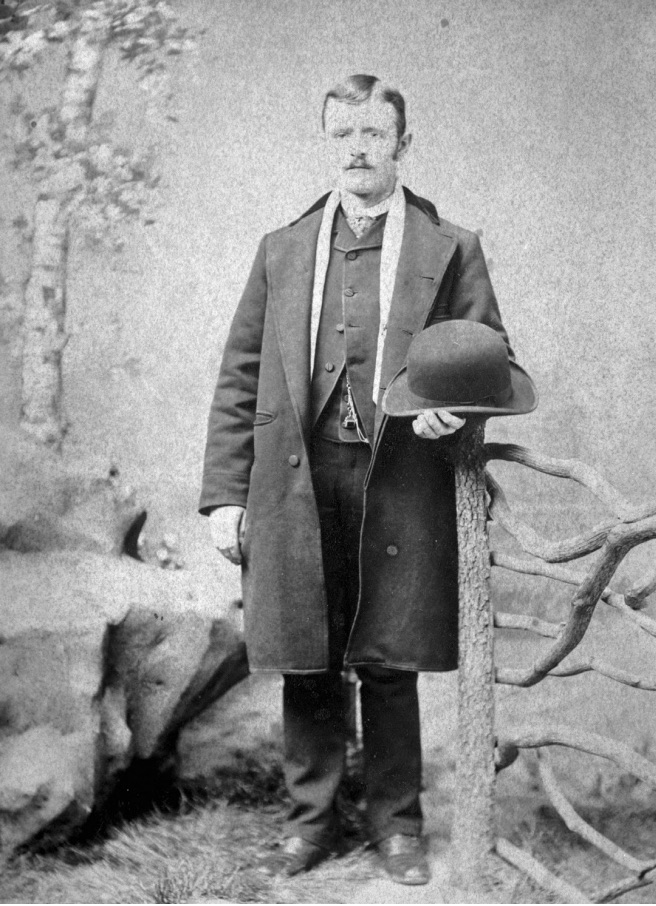
William Remick Beard—b. January 15, 1863; d. March 16, 1952
The interior of the hall is finished in North Carolina pine, with the exception of the floor, which is of No. 1 birch. The hall and balcony are to be equipped with folding chairs, and the stage with appropriate scenery. The first floor is also furnished in hard pine and is already occupied by Newman & Lewis, who carry one of the largest stocks of clothing and dry goods in northern N. H. The basement north side is rented by E. A. Sawyer, who conducts a first-class and up-to-date bowling alley. The basement south side is being fitted for a steam laundry. It will have all the modern improved implements for carrying on a first-class laundry business, and all those that wear “biled” shirts, perpendicular collars, or those that are in need of a petticoat that will stand alone, will do well to patronize Messrs Hardy & Dobson, who, by the way, are newcomers in town and who seem to be men who attend strictly to business and are bound to please their customers.
Thus, I have briefly sketched the building that Mr. Beard has erected at a large expense and which adds much to the town’s valuation besides being a structure in which we will not be ashamed to entertain our city friends during the summer season. The construction of the building was under the supervision of Joshua S. Doane of Marblehead, Mass., an experienced contractor and builder, whose good work speaks for itself much better than we can describe it.
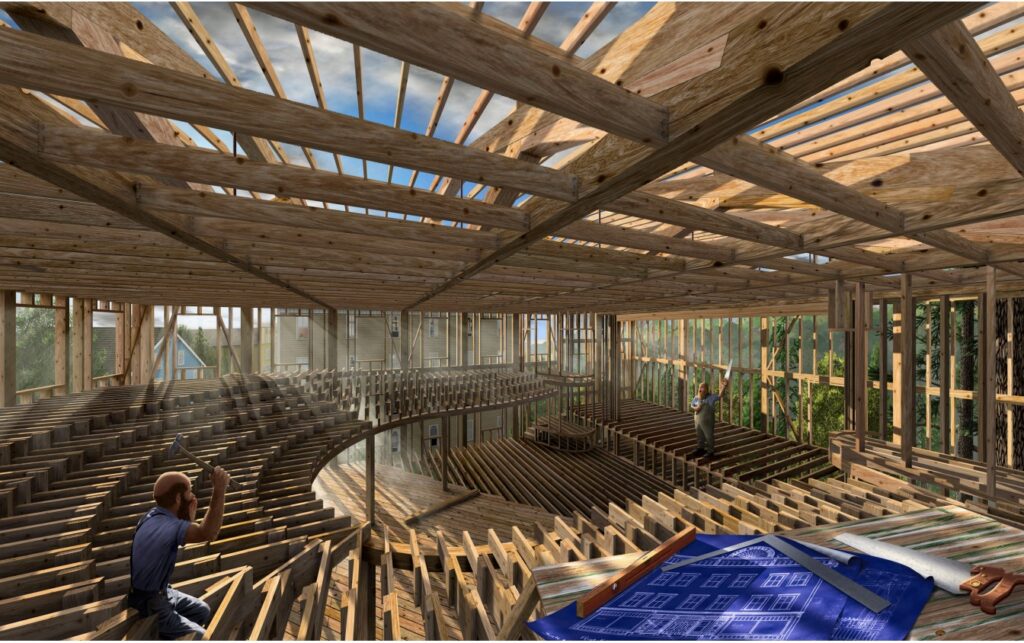
Beard Opera House construction rendering, based on original blueprints, by Charles Uebele.
What we are coming at principally is to write about the formal dedication of the Beard Opera House, May 25th, 1897. There have been two balls in the building previous to this date that were roaring successes in every particular, but the formal dedication was pulled off on the above-named date in the shape of a Masquerade Ball. I shall not attempt to give a complete description of this grand affair because I am not competent. When I saw barn doors, fences, telegraph poles, and display windows decorated with handbills that announced a Masquerade Ball in Beard’s Opera House, I was inspired with the thought that I must go and see what I did see. The order, that consisted of 27 dances, was neatly arranged, and as each number was carried out, it was a grand sight to look upon from a cosy seat in the balcony. The concert, which began at 8 o’clock, was rendered by the well-known St. Clair’s Orchestra of Laconia, and it brought forth storms of applause at the end of each selection.
At 9 o’clock sharp, there appeared upon the scene some of the worst-looking objects ever looked upon by man. Such faces! Why! I nearly fainted. There were long red noses, Roman noses, pug noses, turned up noses, and whiskers by the bag full. Had I not paraded before the looking glass for a considerable time before the ball and satisfied myself as to how bad a man could look without being masked, I would not be writing these lines now.
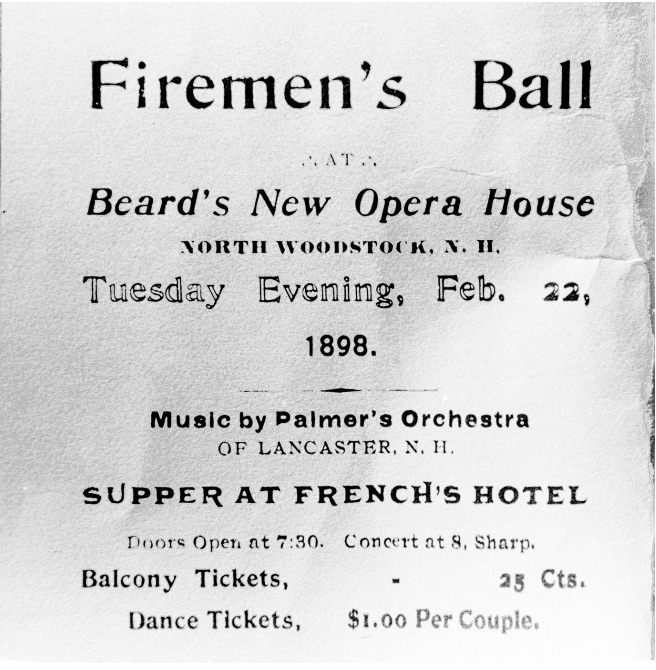
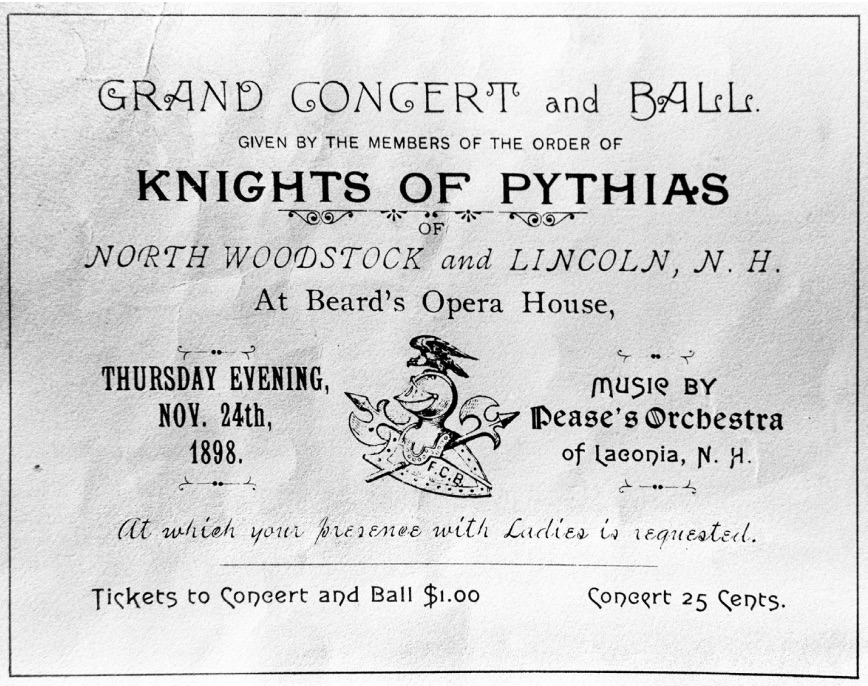
Beard Opera House Advertisements
The grand march was a thing of beauty, all the different changes and movements being under the efficient direction of Mr. Thomas Snow, the genial Chief Floor Manager, who was ably assisted by such aides as Henry W. Currier, Edward Applebee, William Jackson, and A. B. Buntin. It was at the beginning of the 8th number that the cornet sounded for the unmasking, and it was then that the good ladies knew whom they were dancing with. It was also then that we were able to judge who, in our opinion, had the best uniforms and makeups. We think that it was generally conceded that A. B. Buntin and Melvin Sanborn, who each wore colonial costumes, commanded the most admiration on the part of the gentlemen, and on the part of ladies, Miss Stella Blair and Miss Flossie Howland were among those that had very attractive costumes. As for takeoffs, Mr. Bartlett, who impersonated “the kid from Hogan’s Alley,” Henry Burney, the “Hayseed,” and Mrs. Emery, the ghost, were among the best. There was also a veteran from the “Army of the Potomac” who was no other than John Colby Wesley Fifield.
The party was a most civil one, and everything went off in a most admirable manner, which speaks well for the management of the affair. It was a gathering of people that appreciated very much the efforts of Mr. Beard to provide a social event that will long be remembered by those who were present. To sum up, we will say that it was a grand affair, and such social events as this will do much to bring our people into a more social state. Our town has a nice building and hall, and all that remains now is for the people to encourage the enterprise, and the outcome will be most satisfactory to the owner, whose labor to bring that structure into being shows the interest he has taken in making improvements in the town of Woodstock.
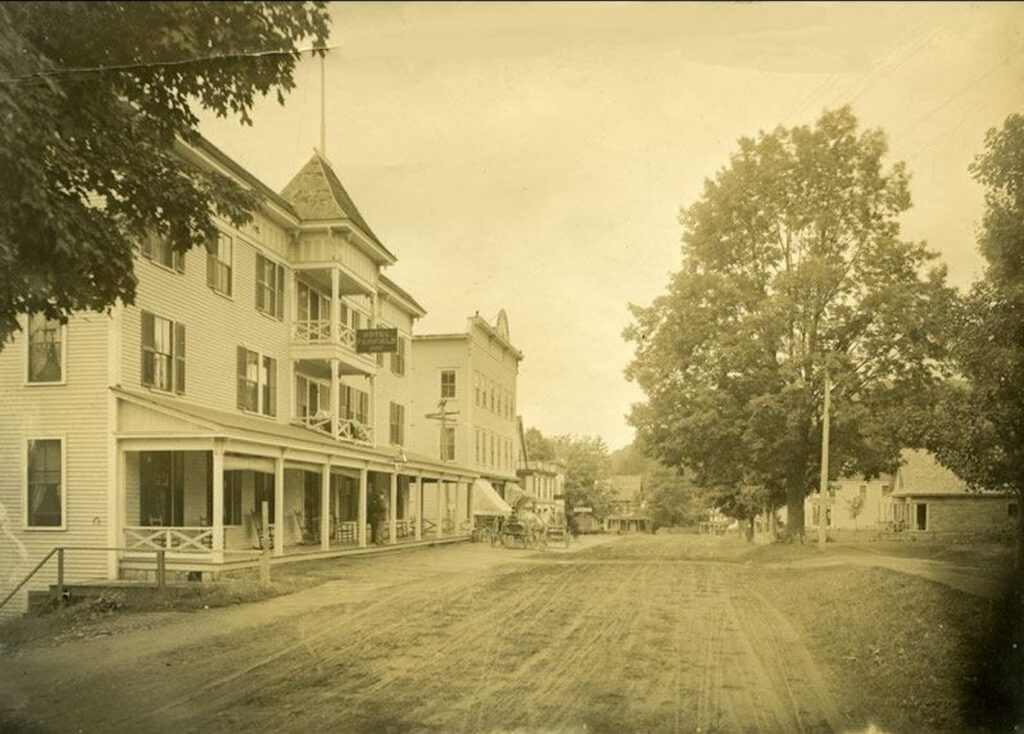
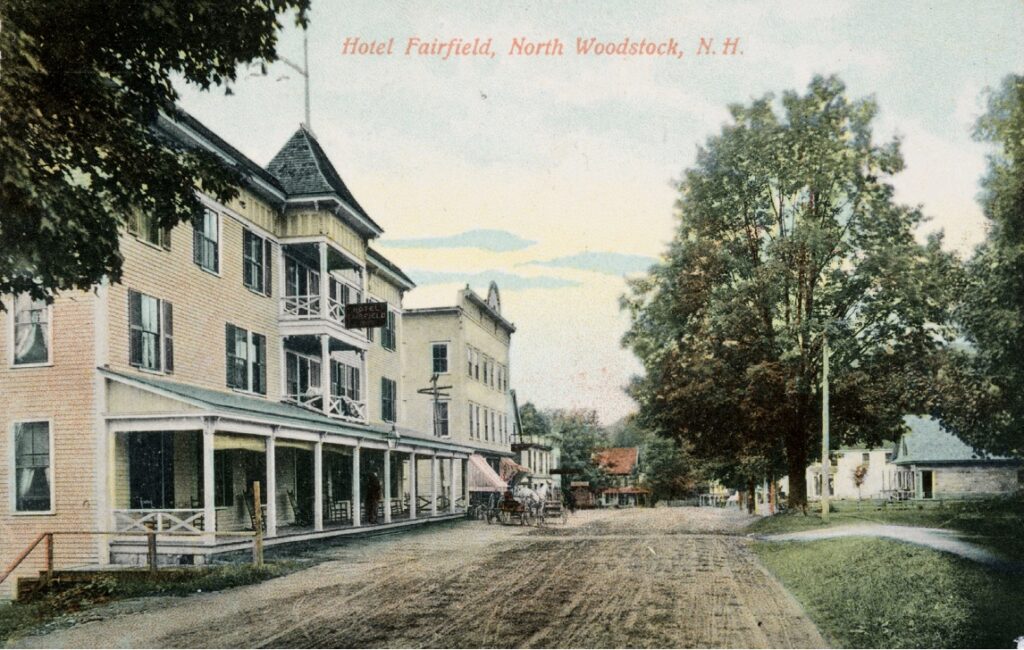
Original Photograph and Vintage Postcard: Hotel Fairfield, with the Beard Opera House beside it, Main Street, North Woodstock, New Hampshire. Both buildings were lost to fire on February 20, 1908.
Additional commentary, from The Plymouth Record, dated December 4, 1897:
We were recently privileged to read a copy of The Plymouth Record, then closing its 11th year of existence only, dated December 4, 1897. The Woodstock correspondent for the Record was the late Elmer E. Woodbury, and all the news except two main events of the week were crowded out by the accounts of the Grand Masquerade Ball, held in Beard’s Opera House, and the marriage of Lillian Bowen Sharon, daughter of Mr. and Mrs. Stephen S. Sharon, to Frank Whitefield Steeves. The marriage was solemnized November 25 at the Mt. View House on Thanksgiving evening, and a wonderful repast was served the guest. Rev. A. B. Russell conducted the marriage ceremony, and Rev. Charles Spurgeon Perkins followed with prayer. There was a long list of guests and presents given, and all written by Mr. Woodbury in his inimitable style.
That same evening, Woodstock did its best to convince the public that a grand masquerade ball could be staged here by local talent. Beard’s Opera Block was nearly new at that time, and William Beard worked hard to make the ball a success. Lists of the prizes awarded for costumes. Benja B. Fox, dressed as a Russian prince, and Timothy McGoldrick, dressed as a Mexican gentleman, took highest prizes, Benja receiving a clock and “Tim” a cup and saucer. Mrs. A. B. Buntin of the Whitehouse Mills section of Lincoln took first booby prize, winning a drum, while Lovell Oakes, masquerading as a “Hayseed” was given a nine-pound squash. The ball was evidently a great success, and old timers here remember to this day the pleasure “Will” Beard took in its success. Following the ball, a fine supper was served at French’s hotel, also very recently built, which must have been appreciated. Dr. Ernest L. Bell, then newly come to North Woodstock, who was something of an amateur actor, introduced a skit that we are told “brought down the house.” Altogether, Thanksgiving, November 25, 1897, was a notable one in North Woodstock.
A note from the Upper Pemigewasset Historical Society: Justus Conrad is the pen name of Elmer E. Woodbury. He was a resident of Woodstock, New Hampshire, and a prolific writer under both his given and pen names.
NOTES
- Conrad, Justus. “Beard Opera House—1897.” North Woodstock, NH, Newspaper, May 29, 1897. Upper Pemigewasset Historical Society Collection.
- Hotel Fairfield with the Beard Opera House beside it, Main Street, North Woodstock, New Hampshire. Original photograph. Upper Pemigewasset Historical Society Collection.
- Hotel Fairfield with the Beard Opera House beside it, Main Street, North Woodstock, New Hampshire. Colorized vintage real photo postcard (RPPC). Upper Pemigewasset Historical Society Collection.
- Uebele, Charles, comp. “Chapter 7: The Beard Family.” Revised May 2018.
- “Untitled article.” The Plymouth Record (Plymouth, NH), December 4, 1897.

