This Old House
By Eleanor Parker (UPSTREAM Newsletter, February 1, 1987)
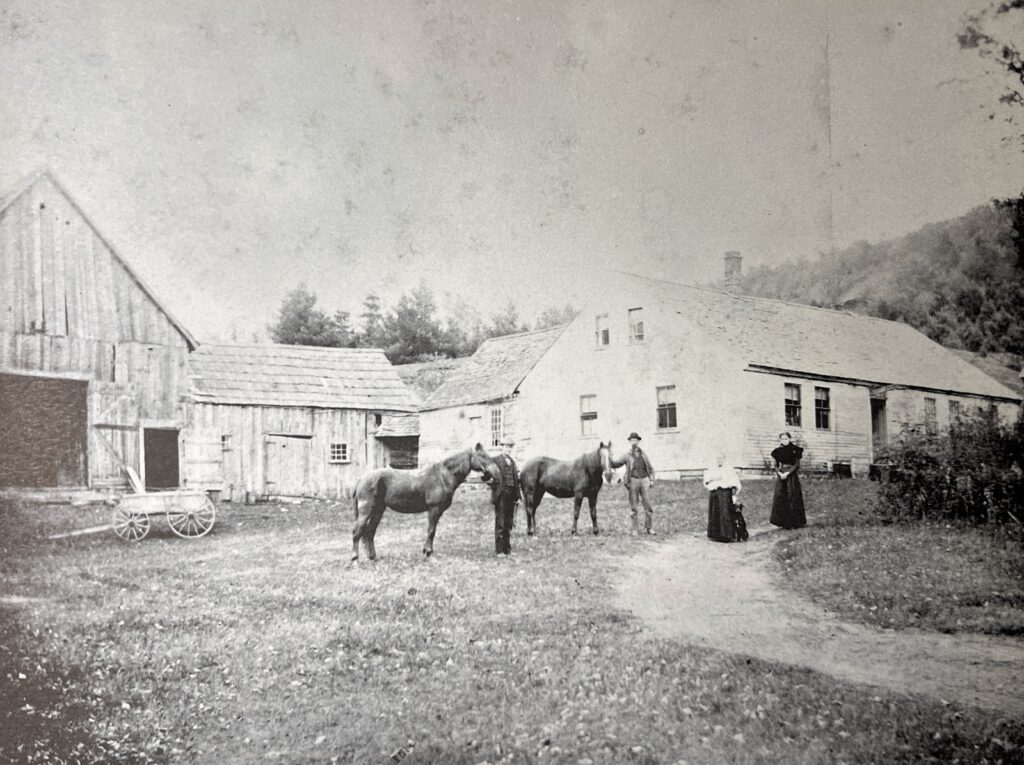
In these days of rapid change, not too many people enter history when they go through their front door. Priscilla Cox of Woodstock does just that from the moment she steps onto the granite block in front of her door—a block taken from the ledge below the house. The back half of her home—four rooms and attic—was built perhaps even before 1800, and still has round rafters with the bark on the wood.
This was the house Thomas and Margaret (Vincent) Pinkham came to from Durham Point in 1806, with their baby daughter, Pamelia, the first child of a large family to be born here. They forded the river and came to an area where Indians had been; arrowheads were found later in the fields. A cousin, Mary Pinkham Smith, later taught school at Mount Cilley, one of the earlier settlements of Peeling (Woodstock), but most of the Pinkham cousins went west. Pamelia, however, and one other Pinkham married two Russells from Franconia. Peter, Pamelia’s husband, doubtless brought the iron utensils in the large kitchen fireplace, which were made at the Franconia Iron Works.
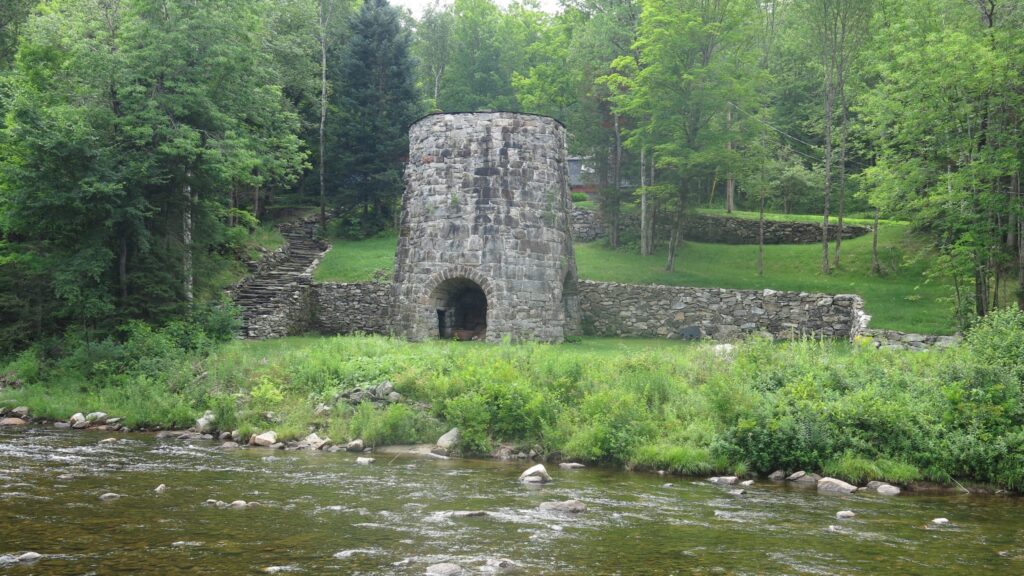
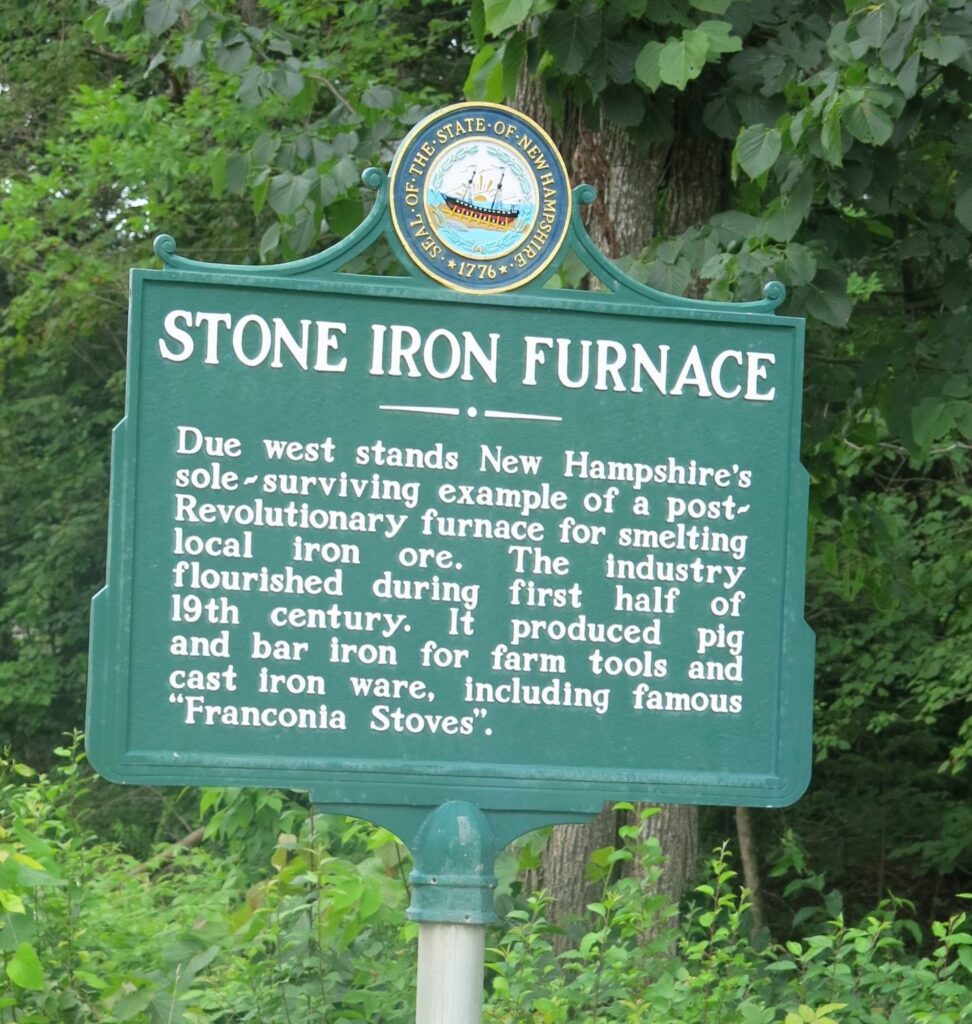
Franconia Iron Works, built in 1801–1802, an early industrial iron-forging site and enduring historic landmark in Franconia, New Hampshire, central to the region’s 19th-century manufacturing history.
Flax was grown on the farm, and there was a sawmill on the little brook below, where lumber for the addition to the house was sawed. Eventually the size of the house was doubled. A big barn was built (torn down some years ago), called a Canadian barn because of the construction with space between the boards to allow air to circulate. The property originally ran from the Pemigewasset River to the top of the mountain named for the Russells.
Pamelia and Peter Russell, whose old leather trunk with initials PR is still in the attic, were abolitionists and were probably related to Russells in Plymouth, also in the Abolition Movement. The Russell Farm became a station on the Underground Railway for runaway slaves escaping to Canada. A large space between the attic floor and the chimney below served as a hiding place for the Blacks, if anyone came to the farm while they were there.
Historic 1895 photograph of the Burney Farm in Woodstock, featuring James Burney, Charles Schofield, Sadie Burney, and Millie Burney.
One of the Russell children, Henry, died in the Civil War. A daughter, Amelia Ann, met James Burney of Bolton, PQ, while visiting in Newport, VT. Mr. Burney was born in Montreal of parents from northern Ireland. James and Amelia Ann were married and came to live at the farm about 1870. Their daughter, Mary Burney, was to be Priscilla’s mother. One change the Burneys made in the house was to replace the old, small-paned windows.

The Burney Farm, 1915
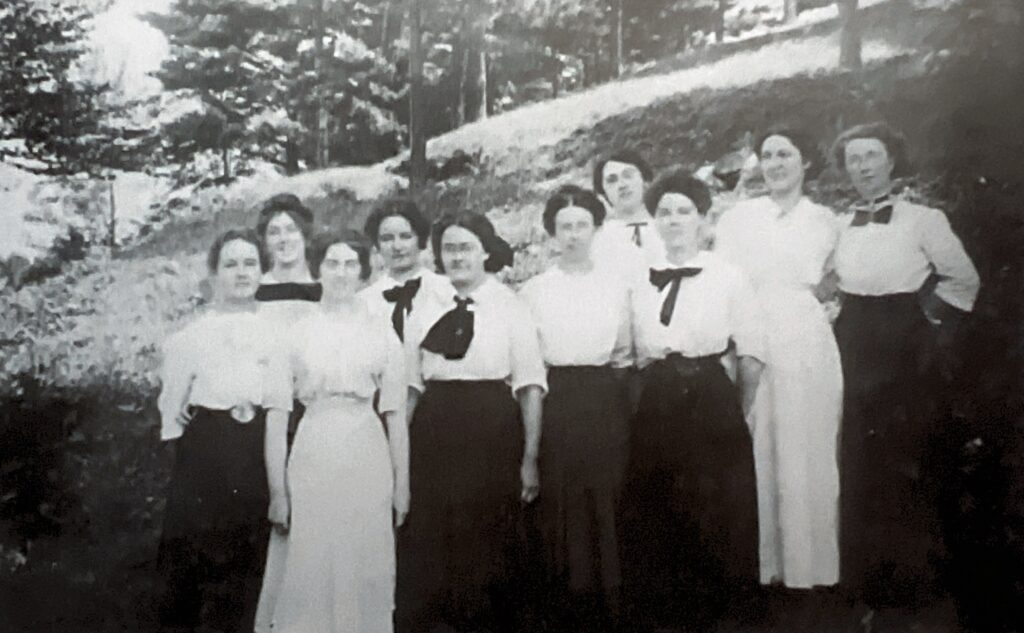
As a young woman, Mary Burney worked as a waitress at the Fairview Hotel (south of the Burney Farm). Irving Elmer Cox, oldest of eleven children of a Boston family, began coming to the Hotel with the YMCA. Irving and Mary married in 1916, and lived in Massachusetts. Their first baby died, but later they had a son, Parker (who died in the Battle of the Bulge in WWII). His daughter, Bonnie Emerson, was the fourth generation born on the farm and is now a grandmother of three.
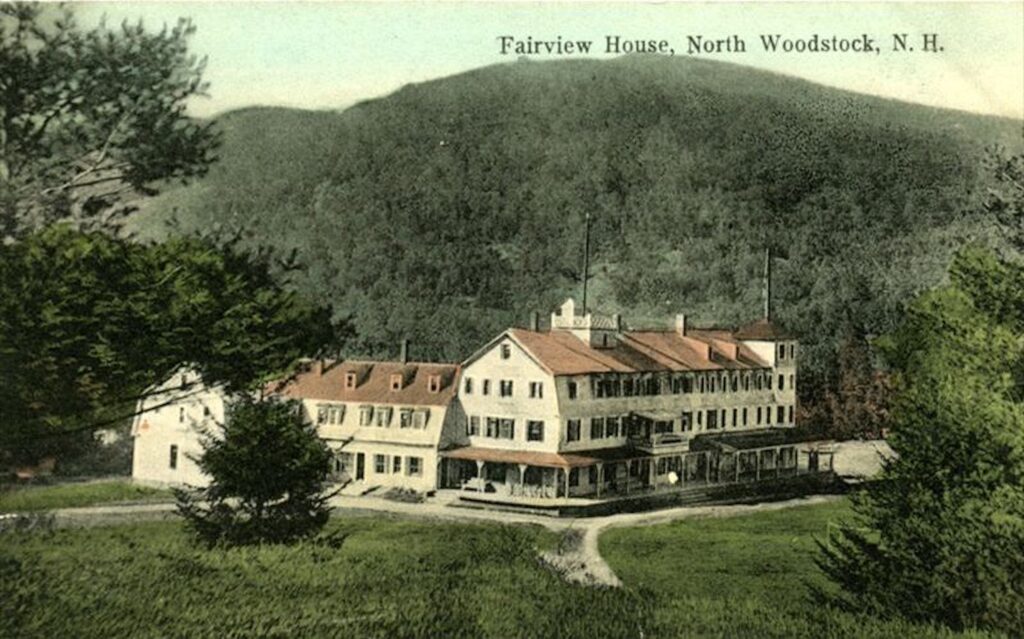
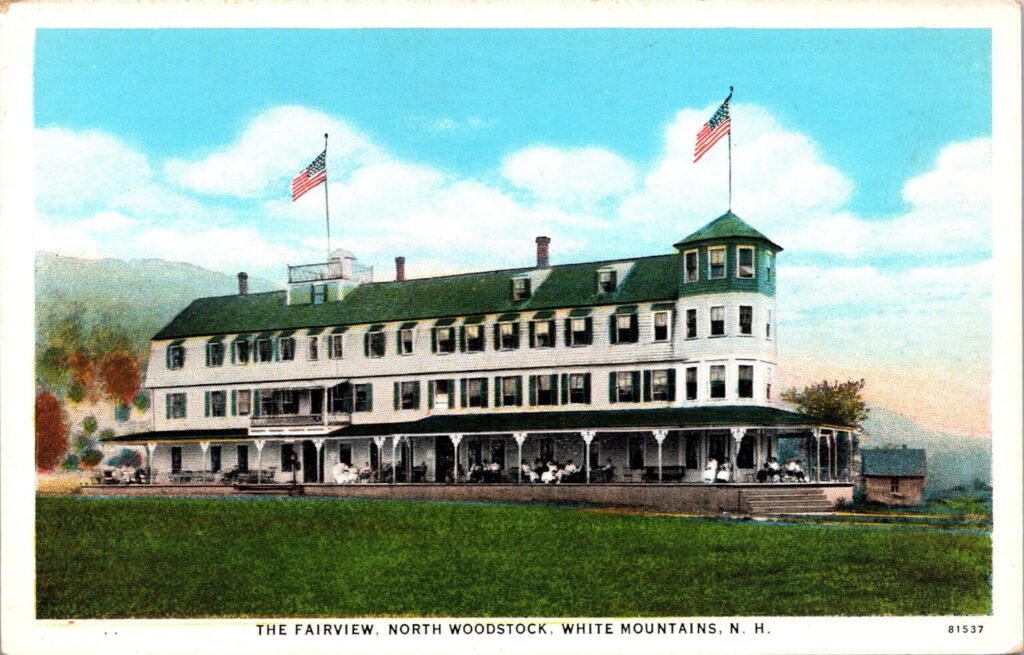
Fairview Hotel Postcards, North Woodstock, New Hampshire
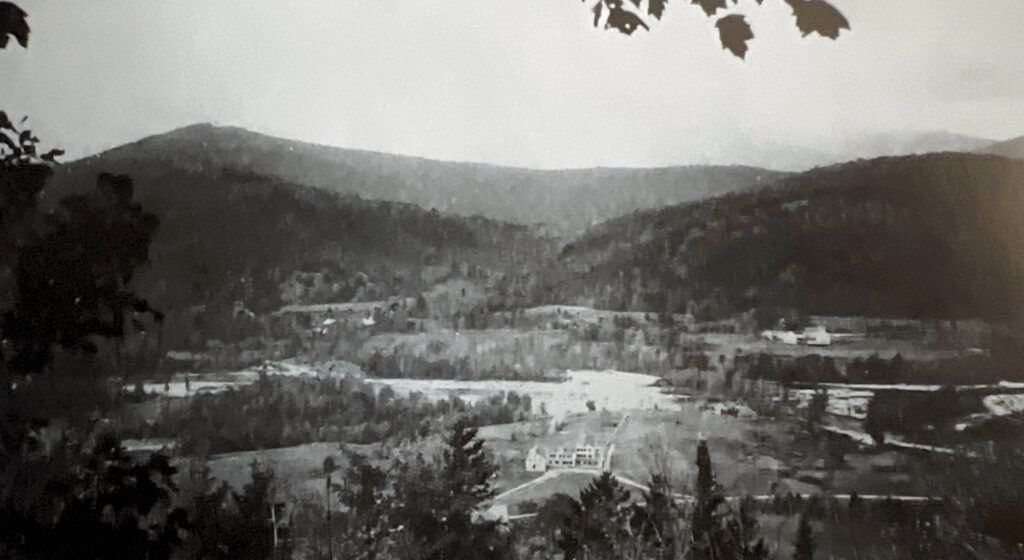
Fairview Hotel property, eastern perspective.
The Fairview Hotel’s waitstaff, including Blanch (McDonald) Burney, Ivy (McDonald) Govoni, Mary Burney, Ms. Cox, and Abbie Gustafson.
The Coxes moved to the farm about 1920, where Irving learned farming and dairying with pigs, chickens, and a herd of ten cows. Here Priscilla was born. Her grandfather, James Burney, still lives with the family and took care of the Baptist church and the movie theater in North Woodstock.
Priscilla remembers some of the interesting “hired” men who helped with the farm work. One, John, called the “Sea Captain,” came from Brunswick, ME, and was very proud of his carefully trimmed white vandyke beard. Another, Albert Hunt, was a native of the area and told many stories of the old days and the old families, stories which Priscilla now wishes she had recorded. One summer a 16-year-old, Clark Case, came to help on the farm. Son of the famous Baptist missionary, Dr. Brayton Case, Clark had come from Burma to go to school in the US. In World War II, Gen. Frank Merrill of Merrill’s Marauders worked with Dr. Case during the Burma Campaign. At that time Mrs. Merrill was living in North Woodstock. So our little town has connections around the world.
Summers on the Burney Farm were busy with a houseful of relatives and friends. Priscilla recalls that her mother wanted her to take piano lessons, but she was having too much fun with the animals, the mountain, the brook, the woods, and lots of company. Winters were quiet, but there was always plenty of work on the farm.
Except for three years in Connecticut during World War II, Priscilla has lived in this historic house all her life and wishes she knew more about its early years. If only “This Old House” could talk, what tales it could tell as it waits for its 200th birthday.
NOTES
- Parker, Eleanor. “This Old House.” The UPSTREAM (Upper Pemigewasset Historical Society), vol. 1, no. 2 (February 1, 1987): 2–3.
- Franconia ArtWalk. Franconia Iron Works. Photographs. Franconia, NH. https://artwalkfranconianh.org/points-of-interest/ (accessed December 10, 2025).
- The Burney Farm, 1895. Photograph courtesy of the Upper Pemigewasset Historical Society.
- The Burney Farm, 1915. Photograph courtesy of the Upper Pemigewasset Historical Society.
- Fairview Hotel. Postcards courtesy of the Upper Pemigewasset Historical Society.
- Fairview Hotel. Photograph courtesy of the Upper Pemigewasset Historical Society.
- Fairview Hotel waitstaff. Photograph courtesy of the Upper Pemigewasset Historical Society.


Thank you for the wonderful article. We feel very blessed to live on this amazing parcel of History.
Thank you for being the current stewards of this property and honoring its history!
Great details and just fascinating!